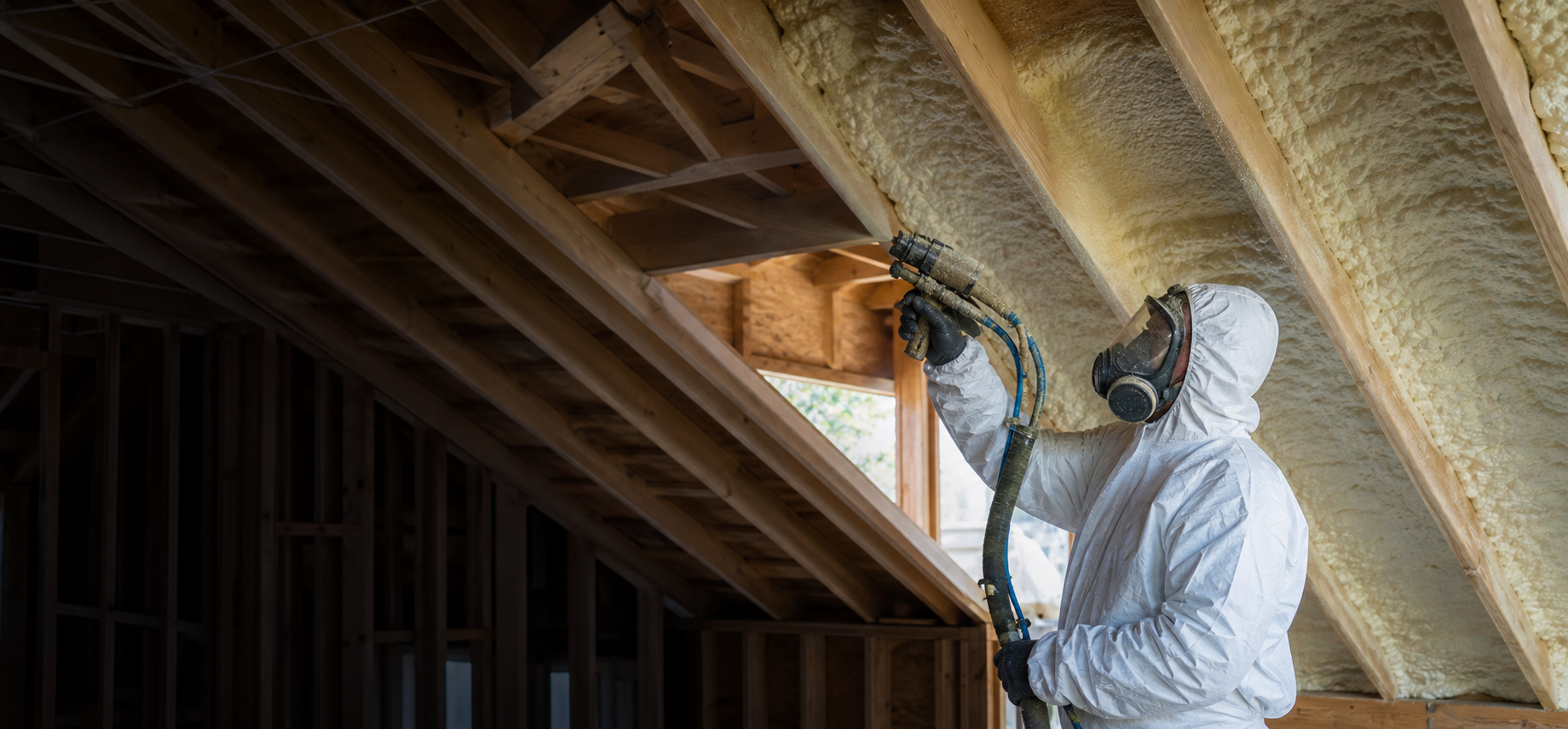
Homes & Living Spaces
Attics, roof decks, walls, garages, additions, existing homes and new construction—planned around comfort, moisture and the existing building enclosure.
Residential insulation →South Florida Insulation Specialists
Spray foam, attic, residential, commercial and shipping-container insulation across Miami-Dade, Broward and the Florida Keys.
Insulation Services
We look at the structure, existing insulation, air leakage, moisture exposure and how the space is used before discussing materials.
Open-cell and closed-cell options for air sealing and thermal control.
Explore spray foam → 02Evaluation, air sealing, removal and installation for hot Florida attics.
Explore attic services → 03Condensation-aware insulation for container homes, offices and storage.
Explore container insulation → 04Solutions for warehouses, metal buildings and commercial structures.
Explore commercial work →Not sure where to start?
Hot rooms, a hard-working air conditioner, damp insulation or container condensation are useful starting points.
Open Cell vs. Closed Cell
Open-cell foam expands more and is typically softer and more vapor-permeable. Closed-cell foam is denser, delivers more R-value per inch and resists water vapor more strongly. The correct choice depends on the assembly—not a universal sales rule.
Compare open cell and closed cell →Attic Insulation
Adding insulation without checking air leakage, roof conditions, ventilation strategy and existing material can miss the real problem. We evaluate the assembly before recommending removal, air sealing, blown-in insulation or spray foam.
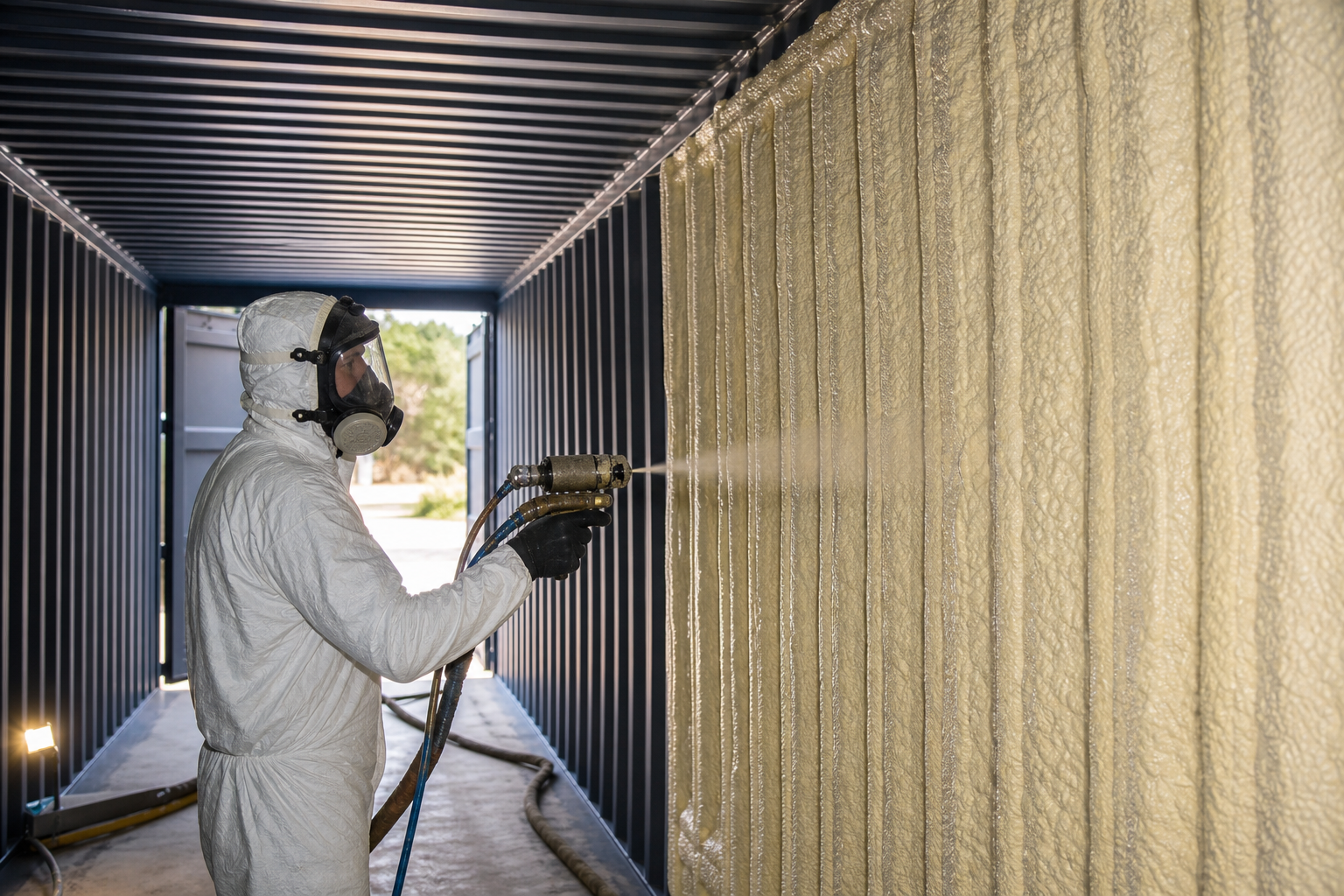
A Major Specialty
Florida sun can rapidly heat a steel shell, while humid air and cool interior surfaces create condensation risk. A continuous foam layer can combine thermal control and air sealing when the material, thickness and interior finish are properly specified.
Residential & Commercial
Attics, roof decks, walls, garages, additions, existing homes and new construction—planned around comfort, moisture and the existing building enclosure.
Residential insulation →Warehouses, metal buildings, tenant spaces and commercial projects where access, scheduling, durability and operating conditions matter.
Commercial insulation →Why Insulation Matters Here
Heat and humidity are not separate problems. Air leakage can carry moisture, metal surfaces can condense water, and attic ductwork may sit in extreme temperatures.
Roofs and metal enclosures absorb intense sun for long periods.
Uncontrolled air carries both heat and water vapor through gaps.
Cool surfaces can fall below the dew point when humid air reaches them.
A coherent thermal and air-control strategy can reduce unwanted loads.
Why Insulation Aces
Good insulation work starts with diagnosing the assembly. We explain both benefits and limitations so you can compare options in the context of your property.
Recommendations account for heat, humidity, rain exposure and cooling-dominated operation.
Attics, containers and metal buildings do not need the same assembly.
Share size, condition, access and project type so the first conversation is useful.
Service Area
How It Works
Share the location, structure type, approximate size and current concern.
We review access, existing materials, moisture signs and project goals.
Understand the recommended material, preparation and important tradeoffs.
Confirm access, protection, installation and post-work expectations.
Common Questions
Every structure is different. These are starting points, not remote diagnoses.
Ask a SpecialistNo. Closed-cell foam has useful vapor resistance and high R-value per inch, but it also costs more and may not be the right fit for every attic or wall. The roof, drying strategy, interior humidity and required thickness all matter.
Not always. Removal may be appropriate when material is wet, contaminated, damaged or blocks needed preparation. Dry, clean insulation can sometimes remain as part of a planned assembly.
Spray foam can follow corrugated steel and create a continuous air-control and thermal layer. Closed-cell foam is often considered where vapor resistance and limited space matter, but thickness, surface preparation, fire protection and interior finishes still require planning.
Square footage helps, but access, substrate, removal, thickness, masking, project type and material choice also affect scope and price.
Free Estimate
Tell us what you are insulating, where it is located and what problem you want to solve. Our team will follow up using your preferred contact method.
Protected by Sender Click Authorization